High Protein Egg Muffins: Easy Meal-Prep Breakfast
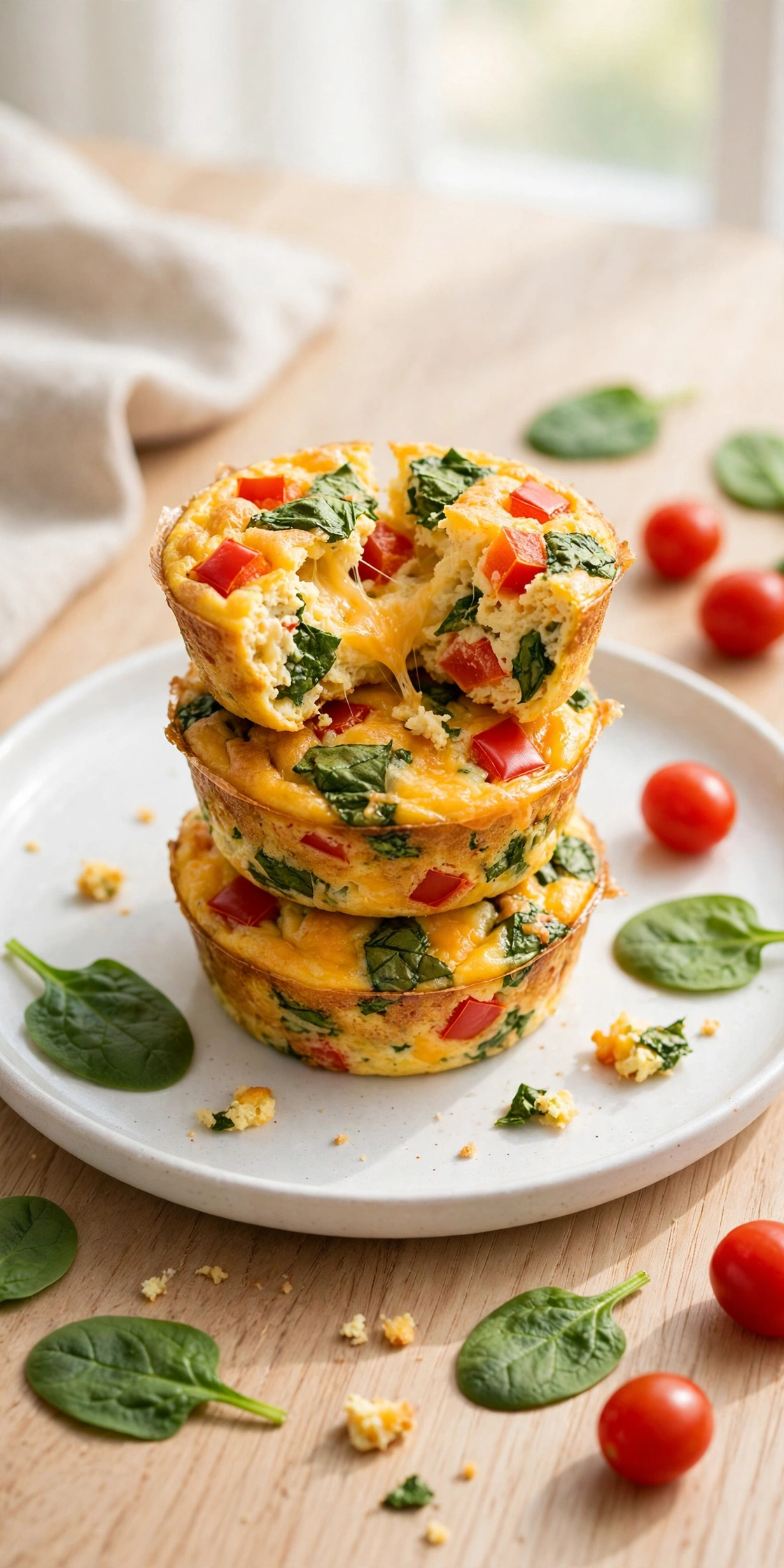
If your mornings need a high protein egg muffins recipe that actually keeps you full until lunch, this is the one. Each fluffy muffin packs 10 grams of protein into a savory, grab-and-go bite — and the secret ingredient is a cup of blended cottage cheese, which makes them impossibly light while quietly boosting the protein.
These are the ultimate meal-prep breakfast: one 30-minute batch gives you 12 portable muffins for the whole week. No chalky protein shake, no sad granola bar — just real food you can reheat in 30 seconds and eat with one hand on busy mornings. Naturally low-carb, endlessly customizable, and built for high-protein small meals, they fit a GLP-1 friendly lifestyle perfectly: high protein plus vegetables in a portion-controlled package that keeps you satisfied for hours.
Why You’ll Love These High Protein Egg Muffins
- 10g protein per muffin — two muffins deliver a full 20g-protein breakfast
- Fluffy, not rubbery — blended cottage cheese is the game-changing trick
- 30 minutes, one pan — 10 minutes of prep, 20 minutes in the oven
- Meal-prep perfect — keeps 4 days in the fridge, 3 months in the freezer
- GLP-1 friendly — high protein, low carb, portion-controlled by design
- Endlessly customizable — 6 flavor variations below, from Denver omelet to pizza-style
- Kid-approved and lunchbox-friendly — savory finger food that disappears fast
Ingredients
Makes 12 egg muffins. Here’s what you need — and why each ingredient matters:
- 10 large eggs — the protein foundation. Room-temperature eggs whisk more smoothly, so pull them out of the fridge 15 minutes early if you can.
- 1 cup low-fat cottage cheese — the secret weapon. Blended smooth, it disappears into the batter, adds ~28g protein across the batch, and gives the muffins their signature fluffy, almost soufflé-like lift. Full-fat works too and tastes richer.
- 1 cup shredded sharp cheddar cheese, divided — 3/4 cup goes into the batter, 1/4 cup on top for that golden, melty crown. Sharp cheddar brings the most flavor per handful; mozzarella, pepper jack, or feta all work.
- 1/2 cup cooked turkey sausage crumbles — adds savory depth and extra protein. Turkey bacon (diced), diced ham, or crumbled breakfast sausage all work — use whatever’s in your fridge.
- 1/2 cup diced red bell pepper — sweetness, color, and vitamin C. Dice it small (about 1/4 inch) so it cooks through in the short bake time.
- 1 cup chopped baby spinach — wilts down to almost nothing but adds iron, fiber, and that classic egg-muffin look. Roughly chop it so no long strands tangle in the cups.
- 1 teaspoon garlic powder — the backbone seasoning. Fresh minced garlic can burn at the edges; powder distributes evenly.
- 1/2 teaspoon onion powder — rounds out the savory flavor without adding moisture.
- 1/2 teaspoon fine sea salt — eggs need assertive seasoning. If your sausage or cheese is very salty, pull this back to 1/4 teaspoon.
- 1/4 teaspoon black pepper — freshly ground if you have it.
- 1/4 teaspoon smoked paprika — optional but lovely; adds warmth and a beautiful golden color.
- Nonstick cooking spray or olive oil — do not skimp here. Egg muffins are notorious stickers, and generous greasing is the difference between muffins that pop out and muffins that don’t.
How to Make High Protein Egg Muffins
Step 1 — Preheat and prep the pan. Heat the oven to 350°F (175°C). Generously coat every cup of a standard 12-cup muffin tin with nonstick cooking spray (or brush with olive oil), getting into the corners and up the sides. This step decides whether your muffins release cleanly.
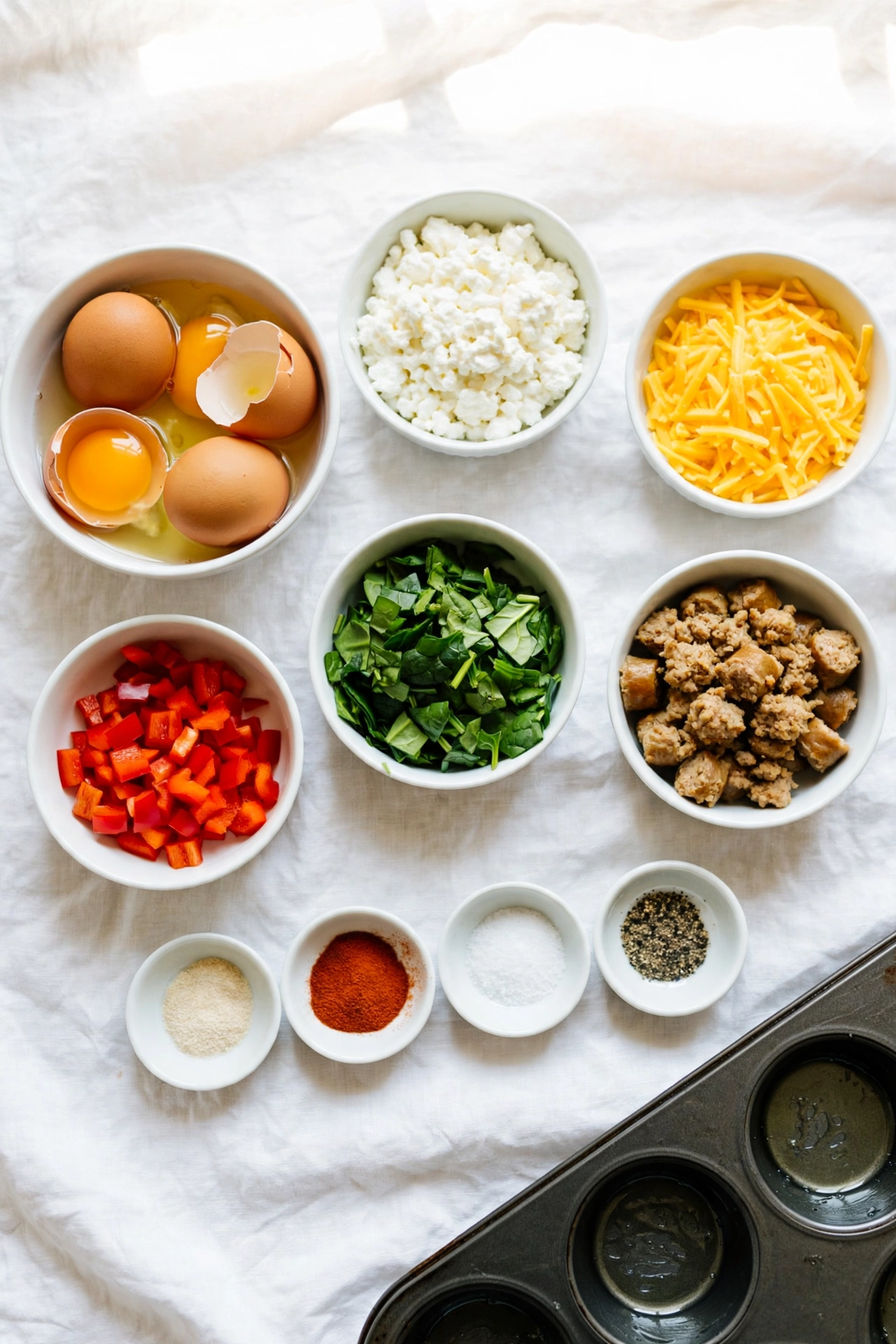
Step 2 — Blend the eggs and cottage cheese. Crack the eggs into a blender, add the cottage cheese, and blend on high for about 30 seconds until completely smooth and slightly frothy. This is the step that separates fluffy high protein egg muffins from dense, rubbery ones — the blender aerates the mixture and dissolves the cottage cheese curds completely.
Step 3 — Season and fold in the fillings. Pour the blended egg mixture into a large mixing bowl. Whisk in the garlic powder, onion powder, salt, black pepper, and smoked paprika. Fold in the diced bell pepper, chopped spinach, turkey sausage crumbles, and 3/4 cup of the shredded cheddar until everything is evenly distributed.

Step 4 — Fill the muffin cups. Divide the mixture evenly among the 12 prepared cups, filling each about 3/4 full. The muffins puff as they bake and settle as they cool — 3/4 full gives them room to rise without spilling over. Sprinkle the remaining 1/4 cup of cheddar evenly over the tops.

Step 5 — Bake until set and golden. Bake for 20–22 minutes, until the centers are just set (no jiggle when you nudge the pan) and the tops are puffed and lightly golden. A toothpick inserted into the center of a muffin should come out clean.
Step 6 — Cool before removing. Let the muffins rest in the pan for 5 minutes — they finish setting as they cool and release much more easily. Run a thin silicone spatula or butter knife around each edge, then lift them out onto a wire rack.

Tips for the Fluffiest High Protein Egg Muffins
Blend the cottage cheese — don’t just stir it. Whole curds make the texture lumpy and wet. Thirty seconds in the blender makes the cottage cheese vanish into the eggs, and the aeration gives you that tall, fluffy rise. No blender? Use an immersion blender, or whisk very vigorously — though the texture won’t be quite as lofty.
Don’t overbake. Egg muffins go from perfectly set to rubbery fast. Start checking at 18 minutes; they’re done when the centers have just the faintest jiggle, since carryover heat finishes them in the pan. Overbaked muffins also deflate more dramatically as they cool.
Grease like you mean it. Even “nonstick” muffin tins will betray you with eggs. A thorough coat of cooking spray — or better, silicone muffin liners — guarantees clean release every time. Paper liners work in a pinch but can stick to the egg; silicone is the gold standard here.
Chop fillings small and pre-cook watery vegetables. Mushrooms, zucchini, and fresh tomatoes release a lot of moisture — sauté them for 2–3 minutes first or your muffins will be soggy. Dense add-ins like bell pepper and spinach can go in raw; just keep the dice small.
Season boldly. Eggs are a blank canvas and underseasoned egg muffins taste flat. The amounts in this recipe are a floor, not a ceiling — taste your raw mixture (before adding raw meat, obviously) and adjust.
Let them rest before unmolding. The 5-minute rest in the hot pan does two jobs: it finishes the centers gently and lets the proteins firm up so the muffins hold together when you lift them out.
6 Flavor Variations
Once you nail the base, rotate through these so breakfast never gets boring. Each variation uses the same egg-and-cottage-cheese base — just swap the fillings and cheese:
- Spinach & Feta (Mediterranean) — Skip the cheddar and sausage. Use 3/4 cup crumbled feta in the batter, keep the spinach, and add 1/4 cup chopped sun-dried tomatoes and 1/2 teaspoon dried oregano. (~9g protein per muffin)
- Denver Omelet — Swap the sausage for 1/2 cup diced ham, keep the bell pepper, add 1/4 cup finely diced onion, and use Monterey Jack instead of cheddar. (~10g protein per muffin)
- Pizza Muffins — Use mozzarella instead of cheddar, add 1/4 cup mini turkey pepperoni and 1 teaspoon Italian seasoning. Serve with warm marinara for dipping — kids lose their minds over these. (~10g protein per muffin)
- Southwest — Use pepper jack cheese, swap the sausage for 1/2 cup cooked chorizo-style turkey sausage, add 1/4 cup diced jalapeño (seeded) and 2 tablespoons chopped cilantro. A spoonful of salsa on top takes them over the edge. (~10g protein per muffin)
- Veggie Supreme — Skip the meat entirely. Sauté 1 cup diced mushrooms and 1/2 cup diced zucchini for 3 minutes first, then fold in with the spinach and bell pepper. Use Swiss cheese for a nutty note. (~8g protein per muffin)
- Bacon & Gruyère (Starbucks-Style) — Swap the sausage for 6 slices of cooked, crumbled turkey bacon and the cheddar for shredded Gruyère. Rich, savory, and dangerously close to the coffee-shop egg bites — at a fraction of the price. (~11g protein per muffin)
Meal Prep & Storage
These high protein egg muffins were born for meal prep. Here’s the full playbook:
- Batch it: One 12-muffin batch = six 2-muffin breakfasts. Double the recipe across two tins on Sunday and you’re covered for nearly two weeks (freeze half).
- Fridge life: Cool completely, then store in an airtight container in the refrigerator for up to 4 days. Layer with parchment paper if stacking to prevent sticking.
- Freezer life: Wrap individual muffins (or pairs) in plastic wrap, then stash in a freezer bag for up to 3 months. This is the real power move — a month of breakfasts in one baking session.
- Reheating from the fridge: Microwave 2 muffins for 20–30 seconds. Or warm in a 350°F oven/toaster oven for 5 minutes for slightly crisper edges.
- Reheating from frozen: Microwave 60–90 seconds, flipping halfway. For the best texture, thaw overnight in the fridge first, then reheat as above.
- Grab-and-go: Two muffins fit perfectly in a small container or silicone muffin cups — toss in your bag with a piece of fruit and breakfast is handled.

Nutrition (Per Muffin)
Approximate values: 120 calories, 10g protein, 7g fat, 1g carbohydrates, 0g fiber, 290mg sodium. A standard 2-muffin serving lands at 240 calories and 20g protein — a genuinely high-protein small meal that fits comfortably into a GLP-1 friendly eating pattern. Values shift with your choice of cheese, meat, and add-ins, but the 10g-protein-per-muffin anchor holds across the variations above.
Frequently Asked Questions
Why did my egg muffins deflate after baking?
Totally normal — egg muffins puff dramatically in the oven and settle as they cool, like a soufflé. Blending the cottage cheese (rather than stirring in curds) minimizes the collapse and gives you the tallest, fluffiest result. Even settled muffins taste exactly the same.
Can I make high protein egg muffins dairy-free?
Yes, with trade-offs. Skip the cottage cheese and cheeses, and add 1/4 cup unsweetened soy milk plus 2 tablespoons nutritional yeast to the blended eggs — you’ll land around 7–8g protein per muffin instead of 10. Use a dairy-free shredded cheese if you want the melty top.
How do I keep egg muffins from sticking to the pan?
Three rules: grease generously (cooking spray into every corner), let them rest 5 minutes in the pan before removing, and run a thin spatula around each edge. Silicone muffin liners or a silicone muffin pan make sticking a non-issue entirely.
Are egg muffins good for weight loss?
They can be an excellent tool for it. Each muffin is portion-controlled at ~120 calories with 10g protein, and the protein-plus-vegetable combination promotes fullness — the same principle behind GLP-1 friendly eating. Two muffins with a side of fruit is a satisfying ~300-calorie breakfast.
Can I freeze egg muffins?
Absolutely — they freeze beautifully for up to 3 months. Wrap individually, freeze in a single layer first if you want to avoid sticking, then bag them. Reheat from frozen in the microwave for 60–90 seconds, or thaw overnight in the fridge for the best texture.
The Bottom Line
These high protein egg muffins prove that a 20g-protein breakfast doesn’t require a skillet, a drive-thru, or a chalky shake. Ten minutes of prep, one muffin tin, and you’ve got a week of fluffy, savory, grab-and-go breakfasts that keep you full for hours.
Make a batch this weekend — and if you try one of the six variations, tell us which one became your regular. For more make-ahead mornings that fit a GLP-1 friendly lifstyle, browse our High Protein Breakfasts collection.
High Protein Egg Muffins (10g Protein Each)
Ingredients
Method
- Preheat oven to 350°F (175°C); generously grease a 12-cup muffin tin.
- Blend eggs and cottage cheese until smooth and frothy, ~30 seconds.
- Whisk in seasonings; fold in bell pepper, spinach, sausage, and 3/4 cup cheddar.
- Fill cups 3/4 full; top with remaining 1/4 cup cheddar.
- Bake 20-22 minutes until set and golden.
- Rest 5 minutes in pan, then remove to a wire rack.