
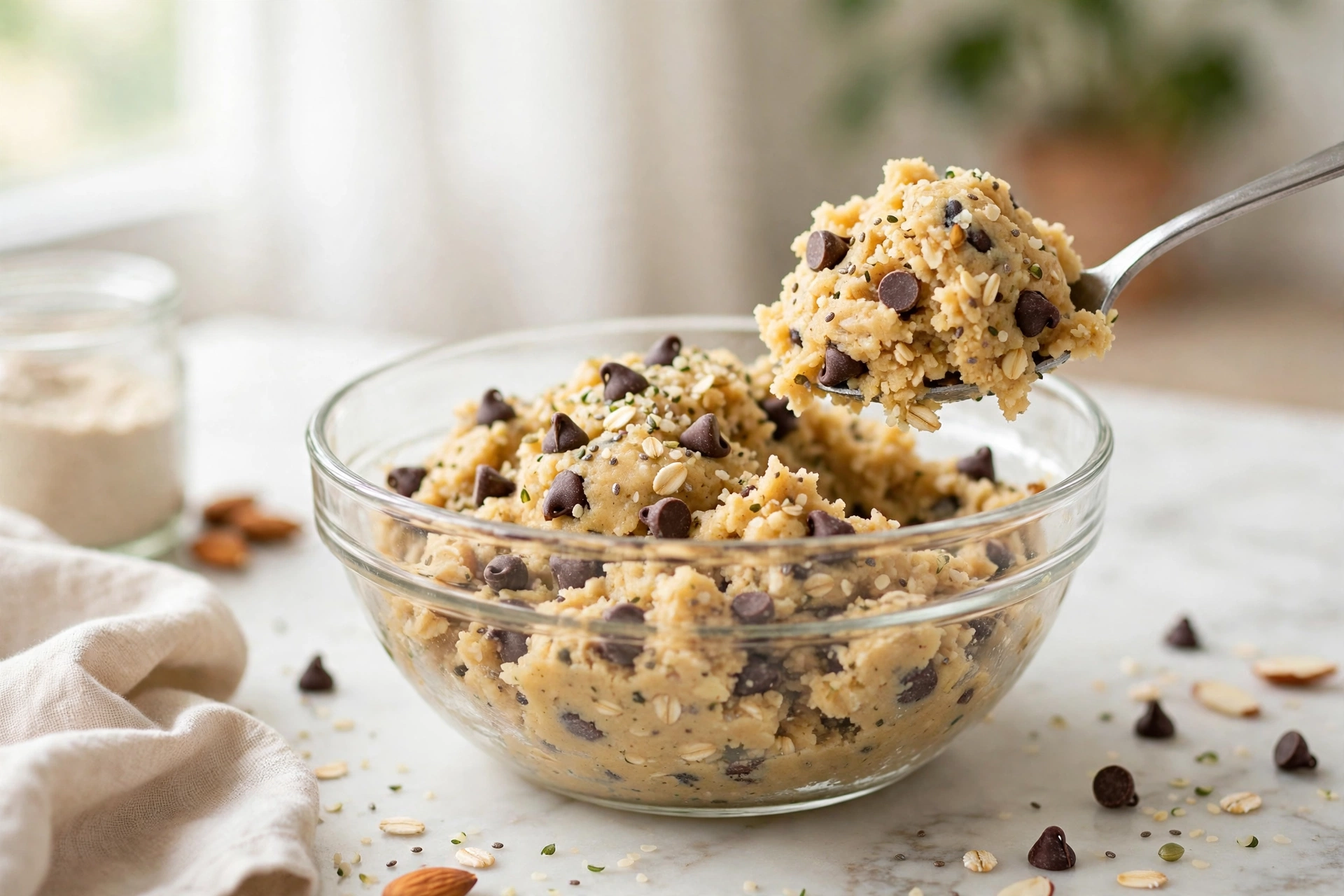
Protein Cookie Dough Recipe (Healthy, Edible)
This protein cookie dough recipe tastes exactly like the dough you used to sneak from the mixing bowl as a kid — only this version is completely safe to eat raw, genuinely filling, and packed with protein. No eggs, no raw flour, no baking required. Just one bowl, ten minutes, and a soft, chocolate-studded dough you can scoop straight from the bowl or roll into bites for the week ahead.
It is the snack this blog was built for: a small, portion-controlled treat that satisfies a dessert craving without derailing the rest of your day. Each two-bite serving of this protein cookie dough recipe delivers 11 grams of protein, and because it is built on almond flour, cashew butter and vanilla protein powder rather than butter and white sugar, it keeps you full far longer than a regular cookie. It is naturally gluten-free, easy to make dairy-free or vegan, and it doubles as a pre-workout bite or lunchbox treat.
Why You’ll Love This Protein Cookie Dough Recipe
- Safe to eat raw — no eggs and no raw wheat flour, so there is nothing to worry about
- Ready in 10 minutes — one bowl, no baking, no chilling required (though a short chill makes it even better)
- 11g protein per serving — real staying power for a dessert-style snack
- Naturally gluten-free — almond flour base, with oat flour and nut-free options below
- Meal-prep friendly — roll into bites and keep them in the fridge all week
- Endlessly customizable — six flavor variations, from peanut butter cup to birthday cake
Ingredients
Here is what you need for one batch (16 bites, or 8 servings of 2 bites):
- 1 cup almond flour, finely ground — the base of the dough. Fine blanched almond flour gives the smoothest, most cookie-like texture; coarse almond meal will taste gritty. If you need a nut-free version, oat flour works (see the variations).
- 2 scoops (60g) vanilla protein powder — whey, whey-casein blend, or a plant-based vanilla blend all work. A whey-casein blend gives the thickest, doughiest result; plant-based powders absorb more liquid, so you may need an extra tablespoon of milk.
- 1/2 cup cashew butter — creamy and neutral-tasting, so the cookie dough flavor shines. Almond butter or peanut butter also work, but they change the flavor (peanut butter makes a delicious peanut butter cup version).
- 1/4 cup maple syrup — sweetens and binds the dough. Honey works too, though it is not vegan. For a lower-sugar version, use half maple syrup and half liquid monk fruit or stevia, and add milk a teaspoon at a time until the dough comes together.
- 2 tablespoons milk of choice — dairy milk, soy milk, or oat milk all work. Add it gradually; different protein powders absorb very different amounts of liquid.
- 1 teaspoon vanilla extract — essential for that real cookie dough flavor. Do not skip it.
- 1/4 teaspoon fine sea salt — balances the sweetness and makes the vanilla and chocolate pop.
- 1/3 cup mini chocolate chips — minis distribute better through the dough than regular chips, so every bite gets chocolate. Dark chocolate chips keep it dairy-free if you use a plant-based protein powder.

How to Make Protein Cookie Dough
Step 1 — Whisk the dry ingredients. Add the almond flour, protein powder, and salt to a medium mixing bowl. Whisk them together with a fork so the protein powder is evenly distributed and cannot clump later.

Step 2 — Add the wet ingredients. Pour in the cashew butter, maple syrup, milk, and vanilla extract.
Step 3 — Mix into a dough. Stir with a spatula or wooden spoon until a thick, soft dough forms. This takes about a minute. If the dough looks dry and crumbly, add milk one teaspoon at a time. If it looks sticky and wet, add almond flour one tablespoon at a time. Every protein powder behaves differently, so trust the texture, not just the measurements.

Step 4 — Fold in the chocolate chips. Add the mini chocolate chips and fold them through gently so they stay whole and evenly spread.
Step 5 — Scoop or serve. Eat it straight from the bowl with a spoon, or use a small cookie scoop (about 1 1/2 tablespoons) to portion it into 16 bites. Roll each one briefly between your palms for a smooth, round bite.

Step 6 — Chill (optional but recommended). Pop the bites into the fridge for 20 to 30 minutes. Chilling firms them up, deepens the vanilla flavor, and makes them taste even more like real cookie dough. If you are eating it from the bowl, a 10-minute chill is plenty.

Tips for the Best Protein Cookie Dough
Whisk the protein powder with the almond flour first. Dumping protein powder into wet ingredients is how you get chalky clumps. Mixing it with the dry flour first guarantees a smooth dough every time.
Adjust liquid to your protein powder. Whey isolate absorbs less liquid than plant-based blends, and a whey-casein blend thickens as it sits. Start with the 2 tablespoons of milk in the recipe, then add more a teaspoon at a time until the dough holds together when pressed but is not sticky.
Do not over-sweeten. Most vanilla protein powders are already sweet, and the maple syrup adds more. Taste the dough before adding extra sweetener — you may find it is perfect as written, especially with the chocolate chips.
Use mini chocolate chips. Regular chips are too big for small bites and tend to fall out. Minis give you chocolate in every bite.
Chill before rolling if the dough is soft. Ten minutes in the fridge firms it up enough to roll cleanly.
6 Flavor Variations
Once you master the base protein cookie dough recipe, rotate through these so the snack never gets boring. Each variation starts from the base recipe above — just swap the mix-ins:
- Peanut Butter Cup — Swap the cashew butter for peanut butter and fold in 2 tablespoons of chopped dark chocolate peanut butter cups instead of half the chocolate chips. (12g protein per serving)
- Birthday Cake — Use vanilla or cake-batter protein powder, swap the chocolate chips for rainbow sprinkles, and add an extra 1/2 teaspoon of vanilla.
- Double Chocolate — Add 2 tablespoons of unsweetened cocoa powder to the dry ingredients and use chocolate protein powder. Reduce the almond flour by 2 tablespoons so the dough stays soft.
- Oatmeal Raisin — Swap half the almond flour for oat flour, fold in 1/4 cup of raisins instead of chocolate chips, and add 1/2 teaspoon of cinnamon.
- Extra-Protein Cottage Cheese — Blend 1/2 cup of cottage cheese until smooth and replace the milk with it, adding it with the wet ingredients. The dough gets creamier and each serving climbs to about 15g of protein. You will not taste the cottage cheese at all.
- Nut-Free Sunflower — Use oat flour instead of almond flour and sunflower seed butter instead of cashew butter, and check that your protein powder and chocolate chips are nut-free. Safe for lunchboxes and nut-free classrooms.

Meal Prep & Storage
This protein cookie dough recipe was made for the fridge. Here is how to keep it at its best:
- Fridge life: Store bites in an airtight container in the fridge for up to 7 days.
- Freezer life: Freeze scooped bites on a lined tray for 1 hour, then transfer to a freezer bag for up to 3 months. Thaw for 20 minutes, or eat straight from the freezer.
- Bowl version: If you prefer dough by the spoonful, store it in a jar in the fridge and scoop as needed. It keeps the same 7 days.
- Packing: Two bites per small container is the perfect grab-and-go portion for work, the gym bag, or a school lunchbox.
- Do not bake this dough. It has no eggs and no leavening, so baked it will spread and dry out rather than turning into cookies.
Nutrition (Per Serving, 2 Bites)
Approximate values: 260 calories, 11g protein, 20g carbohydrates, 3g fiber, 17g fat, 12g sugar. Values shift with your choice of protein powder, nut butter, sweetener, and chocolate chips — but the protein anchor holds across variations. The cottage cheese variation (variation 5) raises protein to about 15g per serving.
Frequently Asked Questions
Is this protein cookie dough recipe safe to eat raw? Yes. Traditional cookie dough is risky because of raw eggs and raw wheat flour. This version has neither — the base is almond flour and protein powder — so you can eat it straight from the bowl.
Can I make protein cookie dough without protein powder? You can, but it will no longer be a protein cookie dough recipe in any meaningful sense. Replace the protein powder with an extra 1/2 cup of almond flour and 2 tablespoons of Greek yogurt for binding, and expect around 4g of protein per serving instead of 11g.
Why is my protein cookie dough dry or crumbly? Almost always the protein powder. Plant-based blends and whey-casein blends absorb far more liquid than whey isolate. Add milk one teaspoon at a time and mix well between additions until the dough holds together when squeezed. If you overshoot and it gets sticky, add almond flour one tablespoon at a time.
Can I make this protein cookie dough recipe vegan? Easily. Use a plant-based vanilla protein powder, maple syrup (not honey), and dairy-free dark chocolate chips. Cashew butter and almond flour are already plant-based, so the rest of the recipe needs no changes.
How long does protein cookie dough last in the fridge? Up to 7 days in an airtight container, and up to 3 months in the freezer. Freeze anything you will not eat in time — frozen bites thaw in about 20 minutes.
The Bottom Line
This protein cookie dough recipe proves that a high-protein snack does not have to taste like a compromise. Ten minutes, one bowl, no baking — and you get the exact flavor you were craving as a kid, in a version that actually keeps you full. Roll a batch on Sunday and dessert is handled all week.
Make a batch tonight — and if you try one of the six variations, tell us which one became your regular. For more snacks that fit a high-protein lifestyle, browse our Low Calorie High Protein Snacks collection.
Protein Cookie Dough Recipe (Healthy, Edible)
Ingredients
Equipment
Method
- Whisk almond flour, protein powder, and salt.
- Add cashew butter, maple syrup, milk, and vanilla; mix into a soft dough, adjusting milk or flour as needed.
- Fold in mini chocolate chips.
- Scoop into 16 bites or serve from the bowl.
- Chill 20-30 minutes before serving.


